
The Ballon d’Or is the award for the best soccer player of the year, first given in 1956, and Lionel Messi holds the record with eight wins. The name is French for “Golden Ball.” This page goes through every winner by year, then who has won the most, then how the vote works. Harry Kane won the 2026 award, announced on October 26, 2026. The winners on that list are the players whose stories Fizbal’s films tell, and the home page gathers every soccer legend and the story behind them.
Every Ballon d’Or winner by year
Stanley Matthews of Blackpool and England won the first award in 1956; the table below covers every year since, newest first.
| Year | Winner | Club | Nationality |
|---|---|---|---|
| 2026 | Harry Kane first English winner since Michael Owen in 2001 | Bayern Munich | England |
| 2025 | Ousmane Dembele | Paris Saint-Germain | France |
| 2024 | Rodri | Manchester City | Spain |
| 2023 | Lionel Messi joined Inter Miami from Paris Saint-Germain earlier that year | Inter Miami | Argentina |
| 2022 | Karim Benzema | Real Madrid | France |
| 2021 | Lionel Messi joined Paris Saint-Germain from Barcelona earlier that year | Paris Saint-Germain | Argentina |
| 2020 | Not awarded no award that year | ||
| 2019 | Lionel Messi | Barcelona | Argentina |
| 2018 | Luka Modric first winner other than Messi or Cristiano Ronaldo since 2007 | Real Madrid | Croatia |
| 2017 | Cristiano Ronaldo | Real Madrid | Portugal |
| 2016 | Cristiano Ronaldo first year after the FIFA merger ended | Real Madrid | Portugal |
| 2015 | Lionel Messi FIFA Ballon d'Or (merged award), the last of the merged years | Barcelona | Argentina |
| 2014 | Cristiano Ronaldo FIFA Ballon d'Or (merged award) | Real Madrid | Portugal |
| 2013 | Cristiano Ronaldo FIFA Ballon d'Or (merged award) | Real Madrid | Portugal |
| 2012 | Lionel Messi FIFA Ballon d'Or (merged award) | Barcelona | Argentina |
| 2011 | Lionel Messi FIFA Ballon d'Or (merged award) | Barcelona | Argentina |
| 2010 | Lionel Messi FIFA Ballon d'Or (merged award), the first of the merged years | Barcelona | Argentina |
| 2009 | Lionel Messi last award before the merger with the FIFA award | Barcelona | Argentina |
| 2008 | Cristiano Ronaldo | Manchester United | Portugal |
| 2007 | Kaka first year open to players at clubs anywhere in the world | AC Milan | Brazil |
| 2006 | Fabio Cannavaro joined Real Madrid from Juventus earlier that year | Real Madrid | Italy |
| 2005 | Ronaldinho | Barcelona | Brazil |
| 2004 | Andriy Shevchenko | AC Milan | Ukraine |
| 2003 | Pavel Nedved | Juventus | Czech Republic |
| 2002 | Ronaldo Nazario joined Real Madrid from Inter Milan earlier that year | Real Madrid | Brazil |
| 2001 | Michael Owen | Liverpool | England |
| 2000 | Luis Figo joined Real Madrid from Barcelona earlier that year | Real Madrid | Portugal |
| 1999 | Rivaldo | Barcelona | Brazil |
| 1998 | Zinedine Zidane | Juventus | France |
| 1997 | Ronaldo Nazario joined Inter Milan from Barcelona earlier that year | Inter Milan | Brazil |
| 1996 | Matthias Sammer | Borussia Dortmund | Germany |
| 1995 | George Weah first winner from outside Europe, the year the award opened to non-European players at European clubs | AC Milan | Liberia |
| 1994 | Hristo Stoichkov | Barcelona | Bulgaria |
| 1993 | Roberto Baggio | Juventus | Italy |
| 1992 | Marco van Basten | AC Milan | Netherlands |
| 1991 | Jean-Pierre Papin | Marseille | France |
| 1990 | Lothar Matthaus awarded in the year of German reunification, having played the 1990 World Cup for West Germany | Inter Milan | Germany |
| 1989 | Marco van Basten | AC Milan | Netherlands |
| 1988 | Marco van Basten | AC Milan | Netherlands |
| 1987 | Ruud Gullit | AC Milan | Netherlands |
| 1986 | Igor Belanov | Dynamo Kyiv | Soviet Union |
| 1985 | Michel Platini | Juventus | France |
| 1984 | Michel Platini | Juventus | France |
| 1983 | Michel Platini | Juventus | France |
| 1982 | Paolo Rossi | Juventus | Italy |
| 1981 | Karl-Heinz Rummenigge | Bayern Munich | West Germany |
| 1980 | Karl-Heinz Rummenigge | Bayern Munich | West Germany |
| 1979 | Kevin Keegan | Hamburger SV | England |
| 1978 | Kevin Keegan | Hamburger SV | England |
| 1977 | Allan Simonsen | Borussia Monchengladbach | Denmark |
| 1976 | Franz Beckenbauer | Bayern Munich | West Germany |
| 1975 | Oleg Blokhin | Dynamo Kyiv | Soviet Union |
| 1974 | Johan Cruyff | Barcelona | Netherlands |
| 1973 | Johan Cruyff joined Barcelona from Ajax earlier that year | Barcelona | Netherlands |
| 1972 | Franz Beckenbauer | Bayern Munich | West Germany |
| 1971 | Johan Cruyff | Ajax | Netherlands |
| 1970 | Gerd Muller | Bayern Munich | West Germany |
| 1969 | Gianni Rivera | AC Milan | Italy |
| 1968 | George Best | Manchester United | Northern Ireland |
| 1967 | Florian Albert | Ferencvaros | Hungary |
| 1966 | Bobby Charlton | Manchester United | England |
| 1965 | Eusebio | Benfica | Portugal |
| 1964 | Denis Law | Manchester United | Scotland |
| 1963 | Lev Yashin the only goalkeeper to win the award | Dynamo Moscow | Soviet Union |
| 1962 | Josef Masopust | Dukla Prague | Czechoslovakia |
| 1961 | Omar Sivori born in Argentina, played for Italy | Juventus | Italy |
| 1960 | Luis Suarez | Barcelona | Spain |
| 1959 | Alfredo Di Stefano born in Argentina, played for Spain | Real Madrid | Spain |
| 1958 | Raymond Kopa | Real Madrid | France |
| 1957 | Alfredo Di Stefano born in Argentina, played for Spain | Real Madrid | Spain |
| 1956 | Stanley Matthews first winner | Blackpool | England |
The table runs to the 2026 award, presented on October 26, 2026, in London, to Harry Kane, the first English winner since Michael Owen in 2001.
The last ten winners, newest first, are Harry Kane (2026), Ousmane Dembele (2025), Rodri (2024), Lionel Messi (2023), Karim Benzema (2022), Messi (2021), Messi (2019), Luka Modric (2018) and Cristiano Ronaldo (2017 and 2016). The COVID-19 pandemic canceled the 2020 award, the only year without one since 1956.
Who has won the most Ballon d’Ors?
The short answer
The table below lists the five players who have won the award three times or more.
| Player | Wins | Years |
|---|---|---|
| Lionel Messi | 8 | 2009, 2010, 2011, 2012, 2015, 2019, 2021, 2023 |
| Cristiano Ronaldo | 5 | 2008, 2013, 2014, 2016, 2017 |
| Michel Platini | 3 | 1983, 1984, 1985 |
| Johan Cruyff | 3 | 1971, 1973, 1974 |
| Marco van Basten | 3 | 1988, 1989, 1992 |
Michel Platini won three in a row from 1983 to 1985, and Messi won four straight from 2009 to 2012; they are the only men to do it. Messi is the only winner credited to three clubs, and the only one credited to a club outside Europe, with Inter Miami in 2023.
The count of eight against five is only one round of the Messi vs Ronaldo debate.
What is the Ballon d’Or, and who runs it?
An individual award for the best player of the season, the Ballon d’Or was created in 1956 by the French magazine France Football, which still presents it. UEFA has co-organized it since 2024; France Football keeps the vote and the name. The World Cup’s Golden Ball is a different award, FIFA’s prize for the best player at one World Cup.
Only European players could win it from 1956 to 1994. From 1995, players of any nationality at European clubs were eligible; George Weah won that year, the first winner from outside Europe. From 2007, players at clubs anywhere in the world could win. The women’s award was first given in 2018, and Aitana Bonmati won it three years running, 2023 to 2025, the first to win it three times. Alexia Putellas won the 2026 award, her third after 2021 and 2022.
How is the Ballon d’Or decided?
Journalists from a fixed list of countries rank the leading players, the rankings turn into points, and the most points wins the Ballon d’Or. The award is decided in four steps.
- France Football’s journalists draw up a shortlist of 30 nominees.
- One hundred journalists, one from each of the top 100 nations in FIFA’s men’s ranking, each rank ten players from it.
- First place earns 15 points, then 12, 10, 8, 7, 5, 4, 3, 2 and 1; the highest total wins, and a tie goes to the player with more first-place votes.
- The winner is announced at a ceremony, in London in 2026, with Paris hosting the year before.
Since 2022 the vote has covered a season instead of a calendar year; the 2025 vote covered the period from August 1, 2024 to July 13, 2025. The criteria are individual performances and decisive character, team performances and achievements, and class and fair play. No formula of goals or assists decides it, and it rewards one season, not a career.
Who votes for the Ballon d’Or?
The voters for the Ballon d’Or are journalists, one from each of the top 100 nations in FIFA’s men’s ranking, the rule since 2022. From 2010 to 2015, national team coaches and captains voted alongside the journalists. From 2016, only journalists voted again, 173 of them that year, one per country.
Is the Ballon d’Or the same as the FIFA award?
The short answer
Which Ballon d’Or winners have the biggest stories?
Five winners on the list above have a story Fizbal’s films tell in full. They are Ronaldinho, Zinedine Zidane, Ronaldo Nazario, Johan Cruyff, and, together, Lionel Messi and Cristiano Ronaldo.
Ronaldinho, 2005
Ronaldinho won the Ballon d’Or in 2005, at the peak of his Barcelona years: Spanish league titles in 2005 and 2006, and FIFA World Player of the Year in 2004 and 2005. The reign was over within three years; Barcelona sold him to AC Milan in July 2008. Fizbal tells the rise and the fall in Ronaldinho’s story.
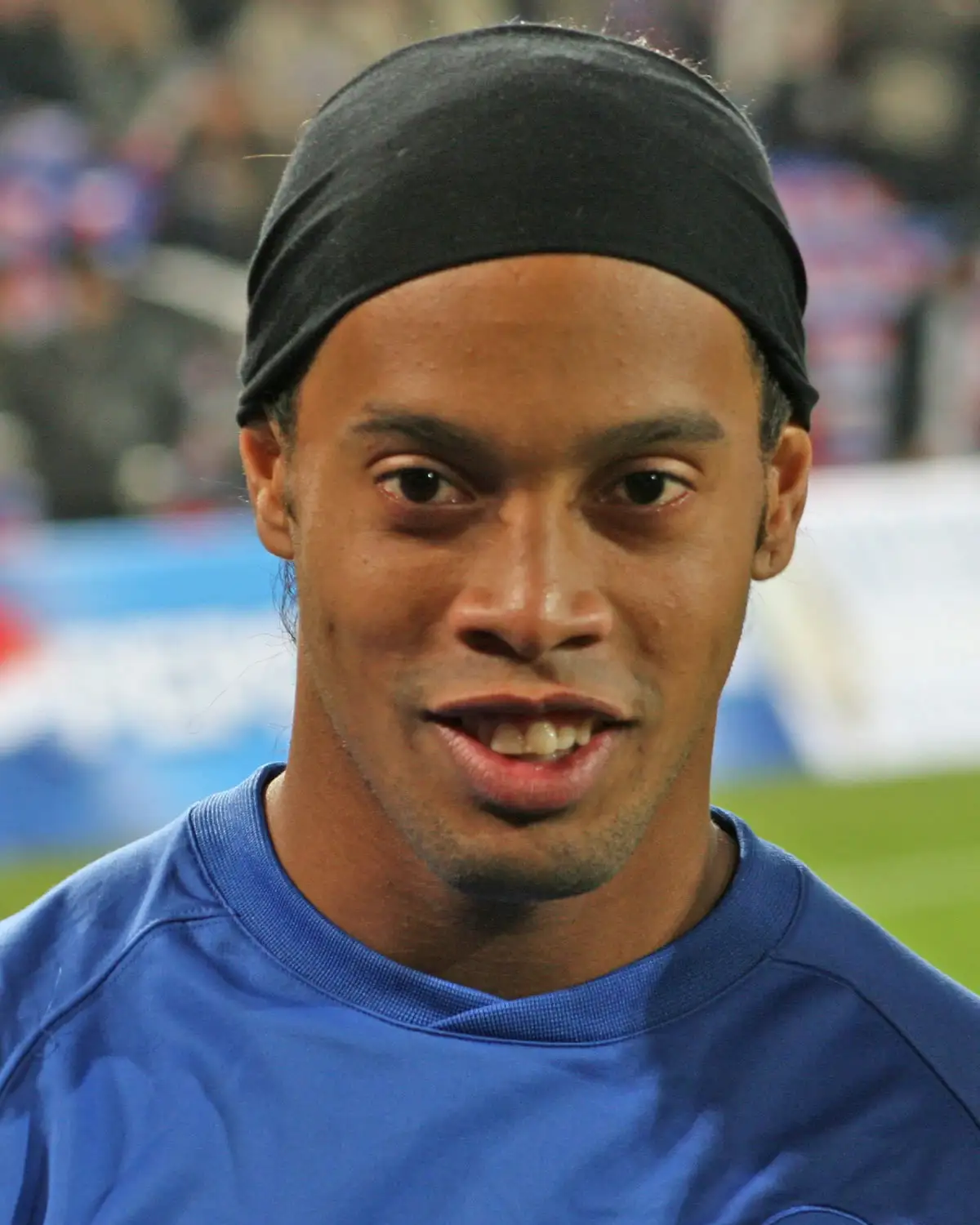
Zinedine Zidane, 1998
Zinedine Zidane won the Ballon d’Or in 1998, the year his two headers settled the World Cup final against Brazil and gave France its first World Cup. He was FIFA’s World Player of the Year that year as well. Eight years later, his last match as a player was the 2006 final, where he was sent off. The film follows both finals in Zidane’s story.
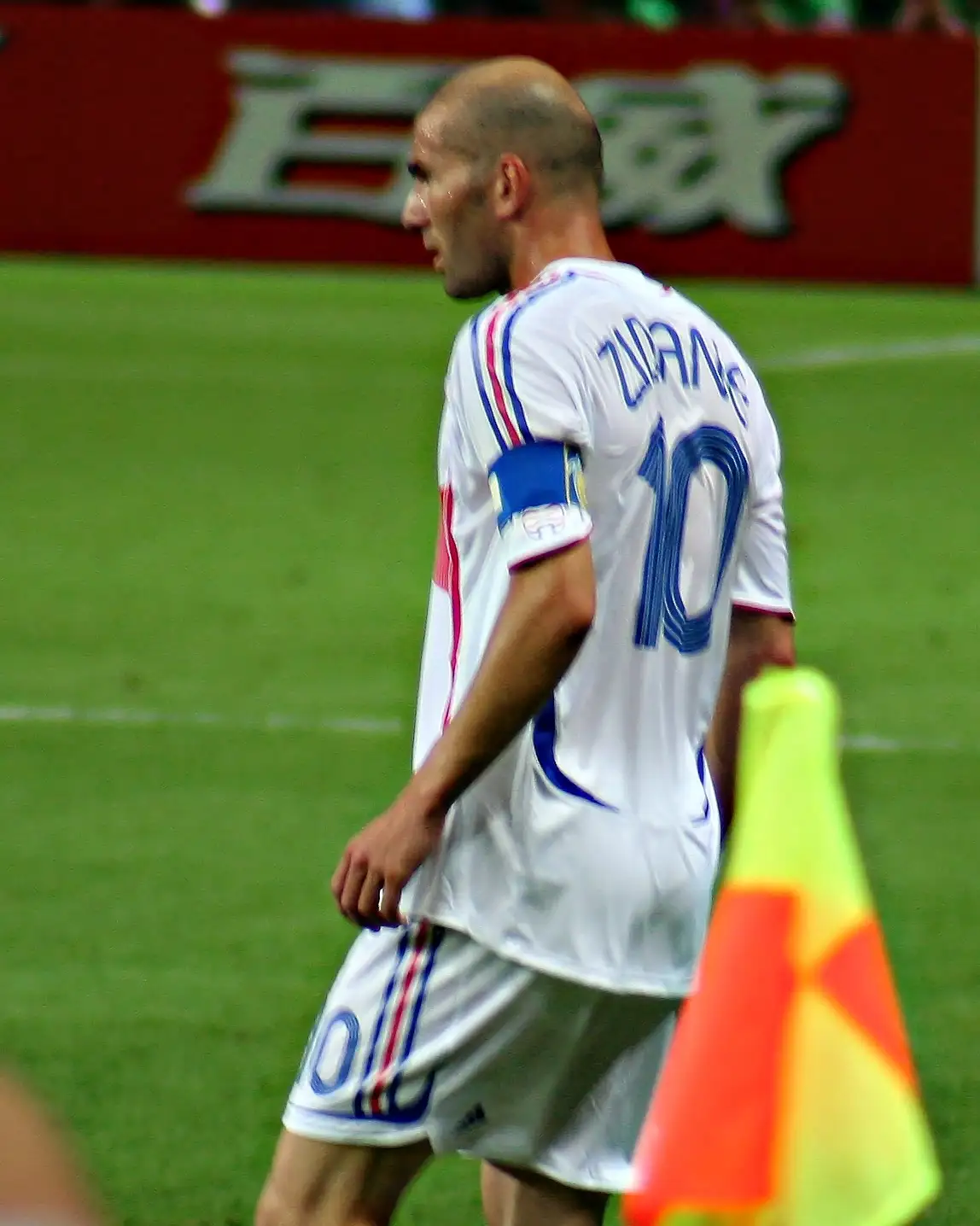
Ronaldo Nazario, 1997 and 2002
Ronaldo Nazario appears twice on the list, in 1997 at Inter Milan and in 2002 at Real Madrid, and the second win is the unusual one. Between the two, he ruptured knee tendons in November 1999 and again in April 2000, then scored both goals in the 2002 World Cup final. The full comeback is R9’s story.
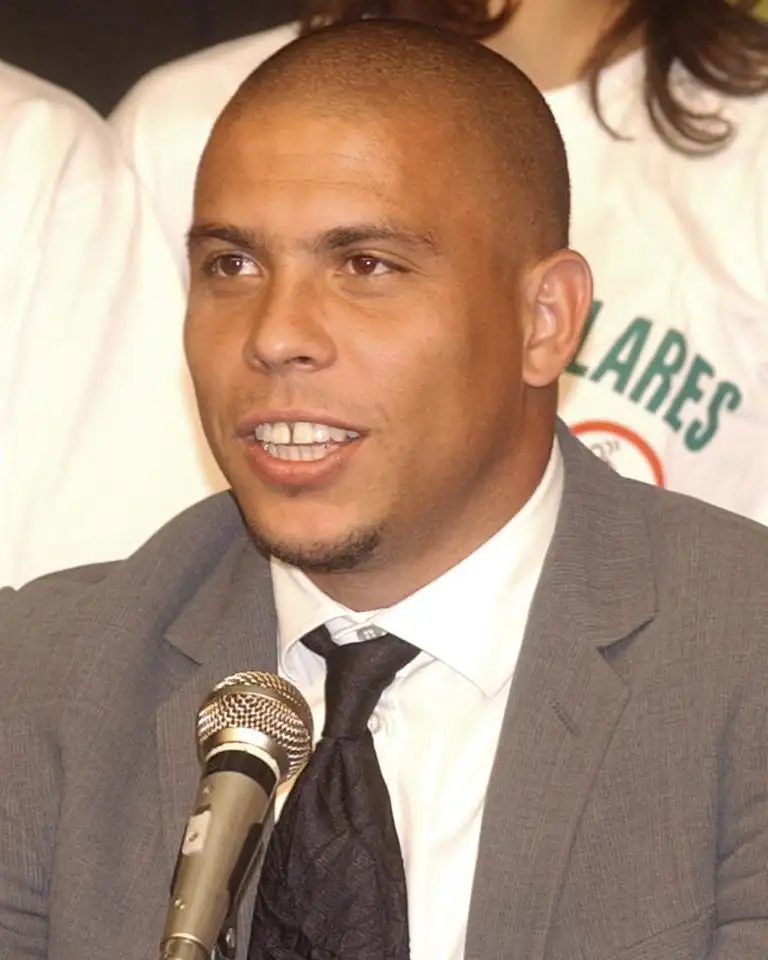
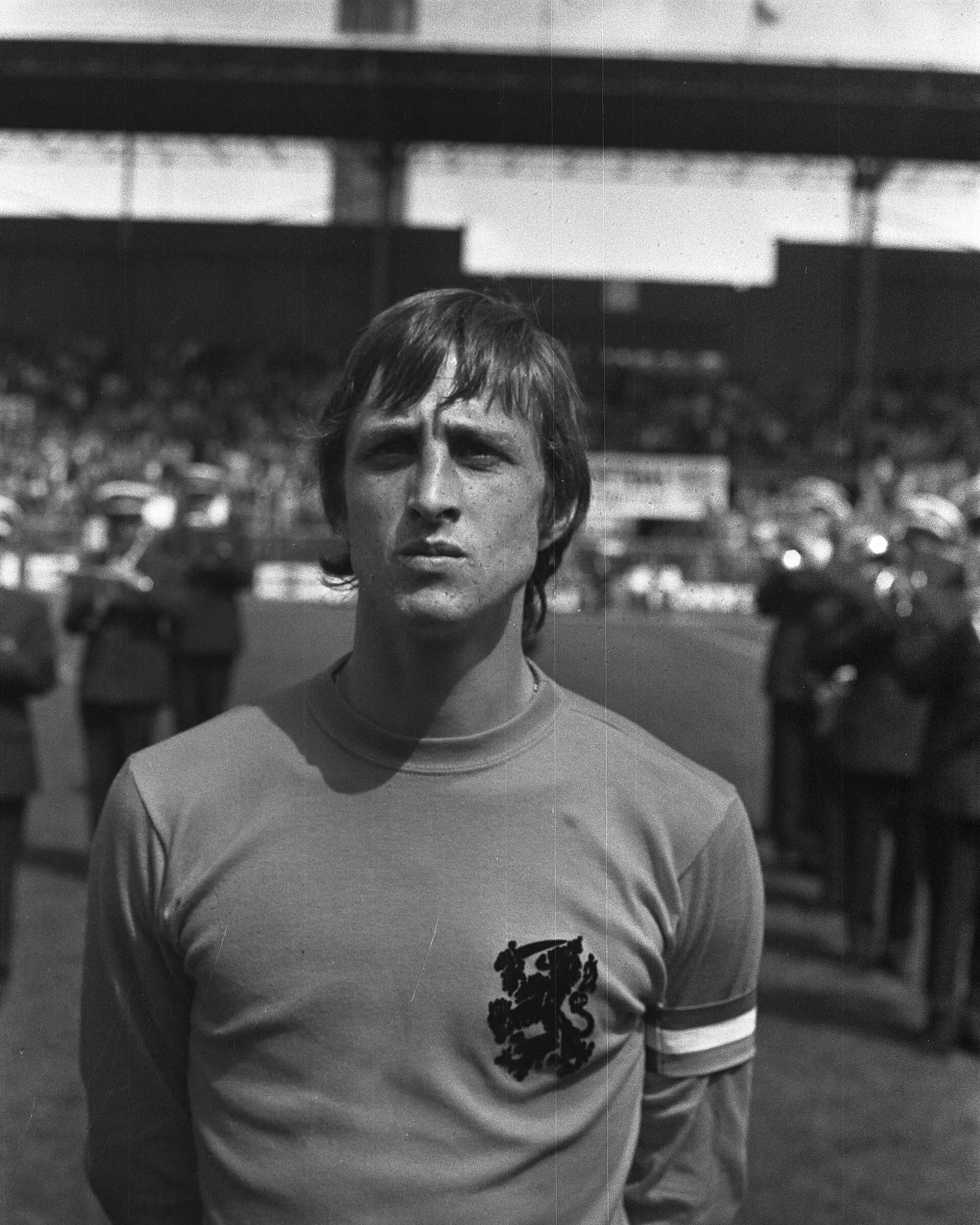
Johan Cruyff, three in the seventies
Three of the seventies’ awards belong to Johan Cruyff: 1971, 1973 and 1974. Ajax won three European Cups, 1971, 1972 and 1973, and Barcelona won the league in his first season, 1973-74, the club’s first in 14 years. Cruyff never lifted a World Cup; the Netherlands he led lost the 1974 final 2-1 to West Germany in Munich. What he changed about football itself is Johan Cruyff’s story.
Messi and Ronaldo, eight against five
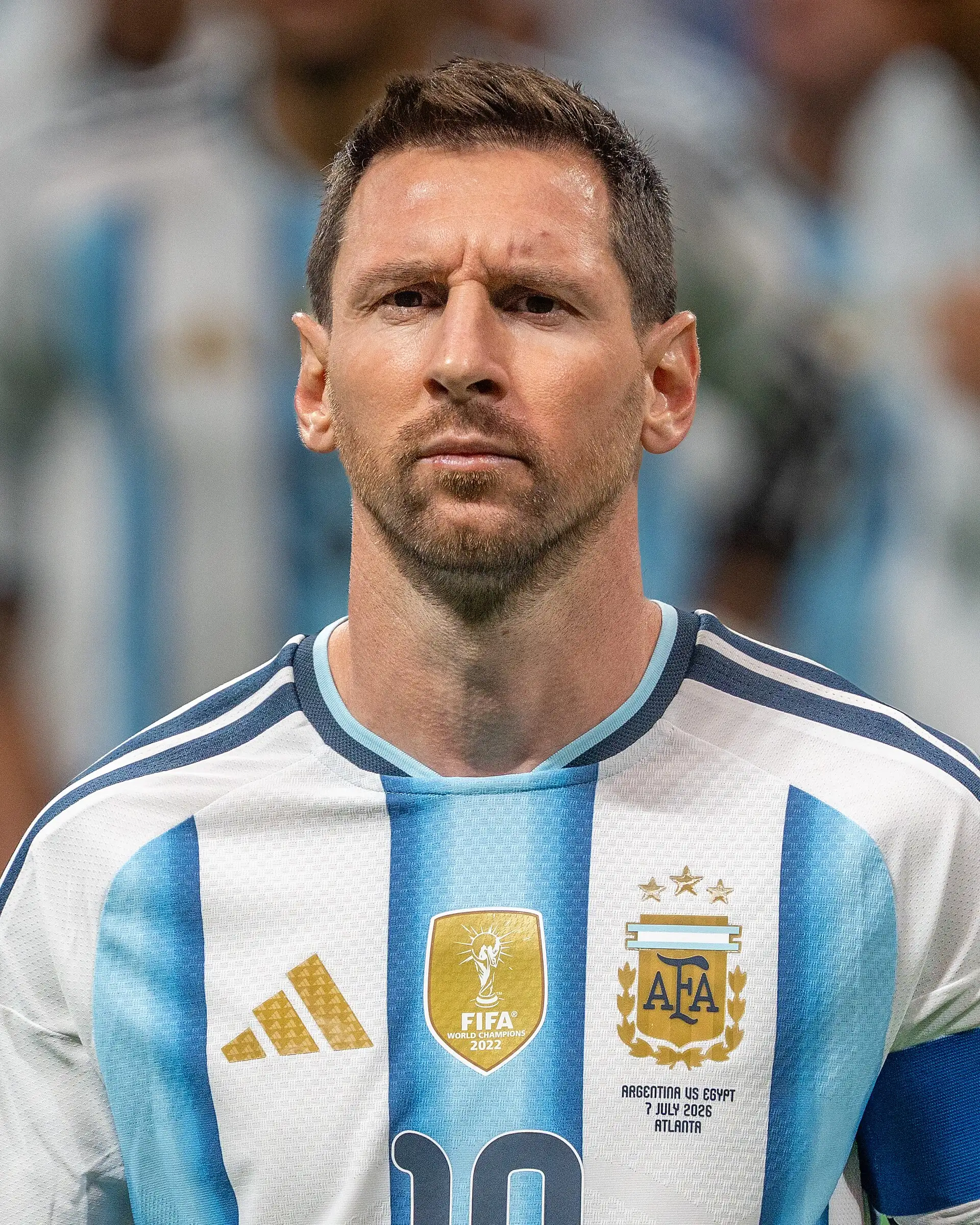
Between them, Lionel Messi and Cristiano Ronaldo hold 13 of these awards, and from 2008 to 2017 one of the two won every one, ten in a row. Luka Modric ended the run in 2018, the first other winner since Kaka in 2007. The peak, the wins and the change are the three questions behind every era judged on Fizbal’s GOAT page.
Why does the Ballon d’Or argument never end?
The Ballon d’Or argument never ends because a team sport is measured with an individual award, one decided by the rankings of 100 people. Every ceremony is followed by a complaint about a snub, and the debate starts again the next morning. The yardstick itself moved in 2022, when a season replaced the calendar year. The stories behind the winners are what Fizbal cares about.


