
The Zidane headbutt is the moment Zinedine Zidane drove his head into Marco Materazzi’s chest in the 110th minute of the 2006 World Cup final, earning a red card in the last match of his career. Zidane acted after words about his sister, and the red card ended his night in Berlin. What Materazzi said exactly has never been settled, because both men have given their own accounts. Italy won the final on penalties, and Zidane was still voted the tournament’s best player before he retired. He keeps his place among the best soccer players of all time.
Why did Zidane headbutt Materazzi?
The short answer
According to the accounts Zidane and Materazzi gave afterward, four things happened in order.
- First, as the two jogged back upfield, Materazzi held and pulled Zidane’s shirt.
- Second, words were exchanged: Zidane told Materazzi he could have the shirt after the match, and Materazzi answered with the insult.
- Third, Zidane started to walk away.
- Fourth, he stopped, turned back and struck Materazzi’s chest with his head.
Materazzi has called the shirt remark mocking; Zidane has said he was telling the defender to stop pulling. What matters next is the sentence that came in between.
What did Materazzi say to Zidane?
The short answer
| Account | What was said | When it was given |
|---|---|---|
| Materazzi | An insult about Zidane’s sister; he denied mentioning Zidane’s mother or saying anything racist | Denials in Gazzetta dello Sport in July 2006; the sister admission in the same paper on September 5, 2006; his exact words in a magazine in August 2007 |
| Zidane | Very harsh words about his mother and his sister, repeated several times | A live television interview in France on July 12, 2006 |
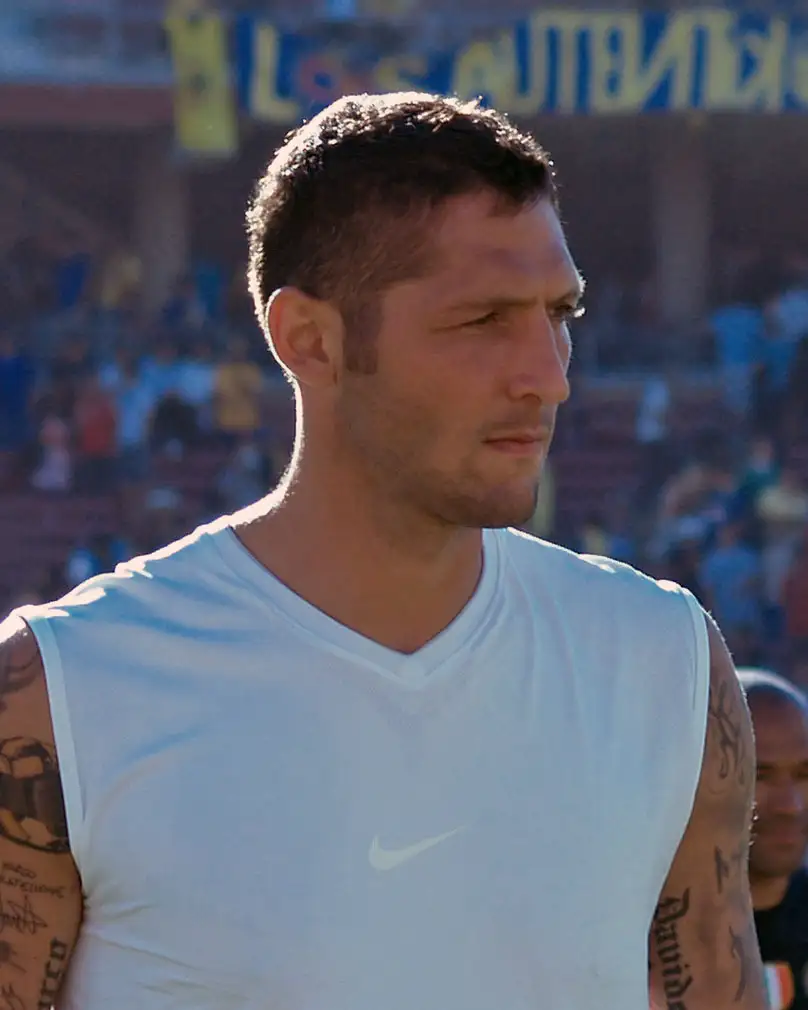
In the days after the final, newspapers and a Brazilian broadcaster hired lip readers to decode the footage, and they reached different conclusions, including claims of a racist insult. Those claims were never verified, and this page does not repeat them: Materazzi denied them, both players told FIFA the words were insulting but not racist, and three British newspapers later paid libel damages. FIFA punished Materazzi for the provocation and Zidane for the blow. The words explain only half of that night; the rest is the final itself.

What happened in the 2006 World Cup final?
The 2006 World Cup final matched Italy against France at the Olympiastadion in Berlin on July 9, 2006, finishing 1-1 after extra time before Italy won the penalty shootout 5-3.
| Minute | Event | Why it mattered |
|---|---|---|
| 7 | Zidane scored a Panenka, a penalty chipped softly down the middle as the goalkeeper dives, in off the underside of the crossbar | Italy had conceded only an own goal all tournament; no opponent had scored on them |
| 19 | Materazzi headed in Andrea Pirlo’s corner | The man at the center of the night had leveled the final |
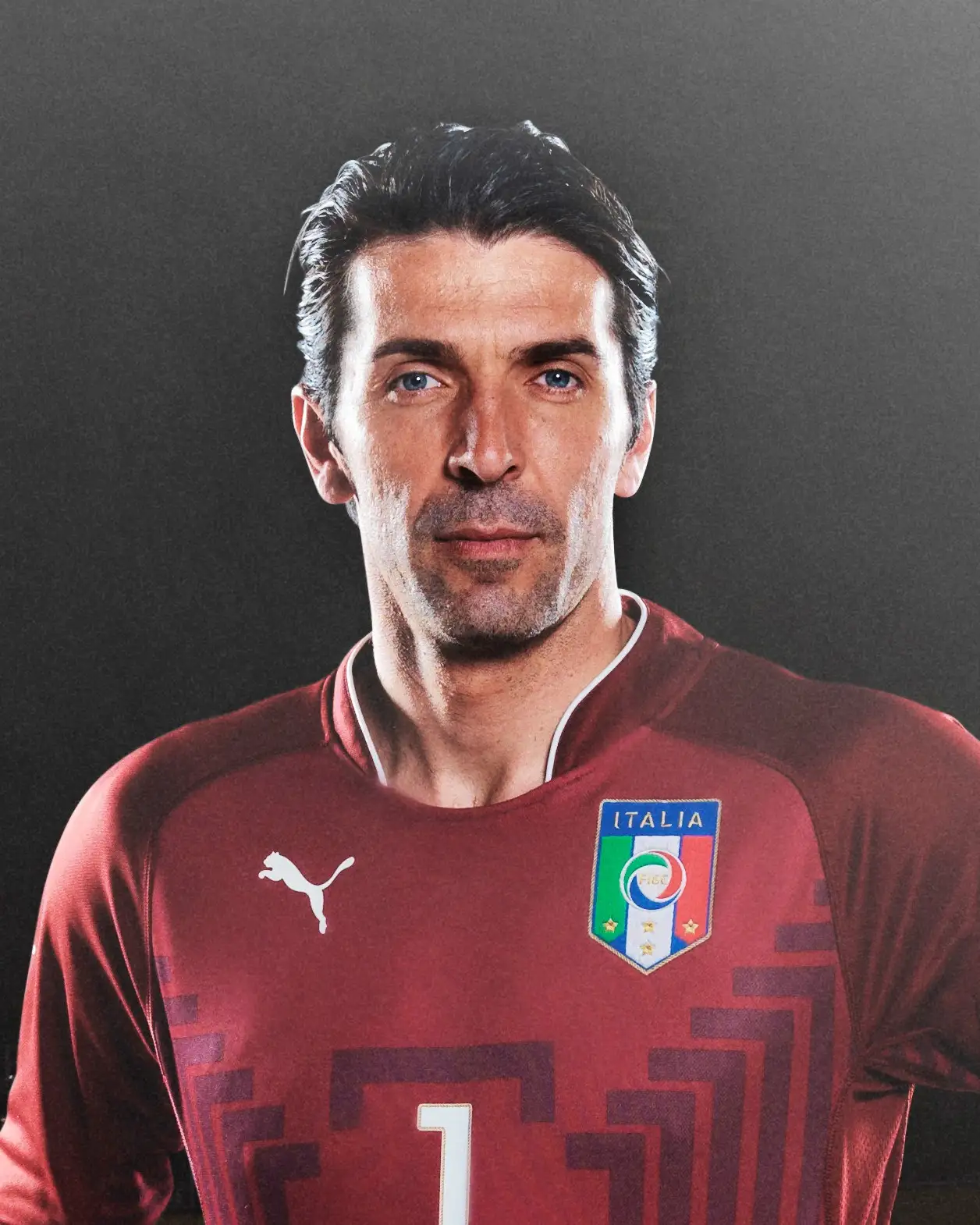
| 104 | Buffon tipped a Zidane header over the bar | The save kept Italy alive deep in extra time |
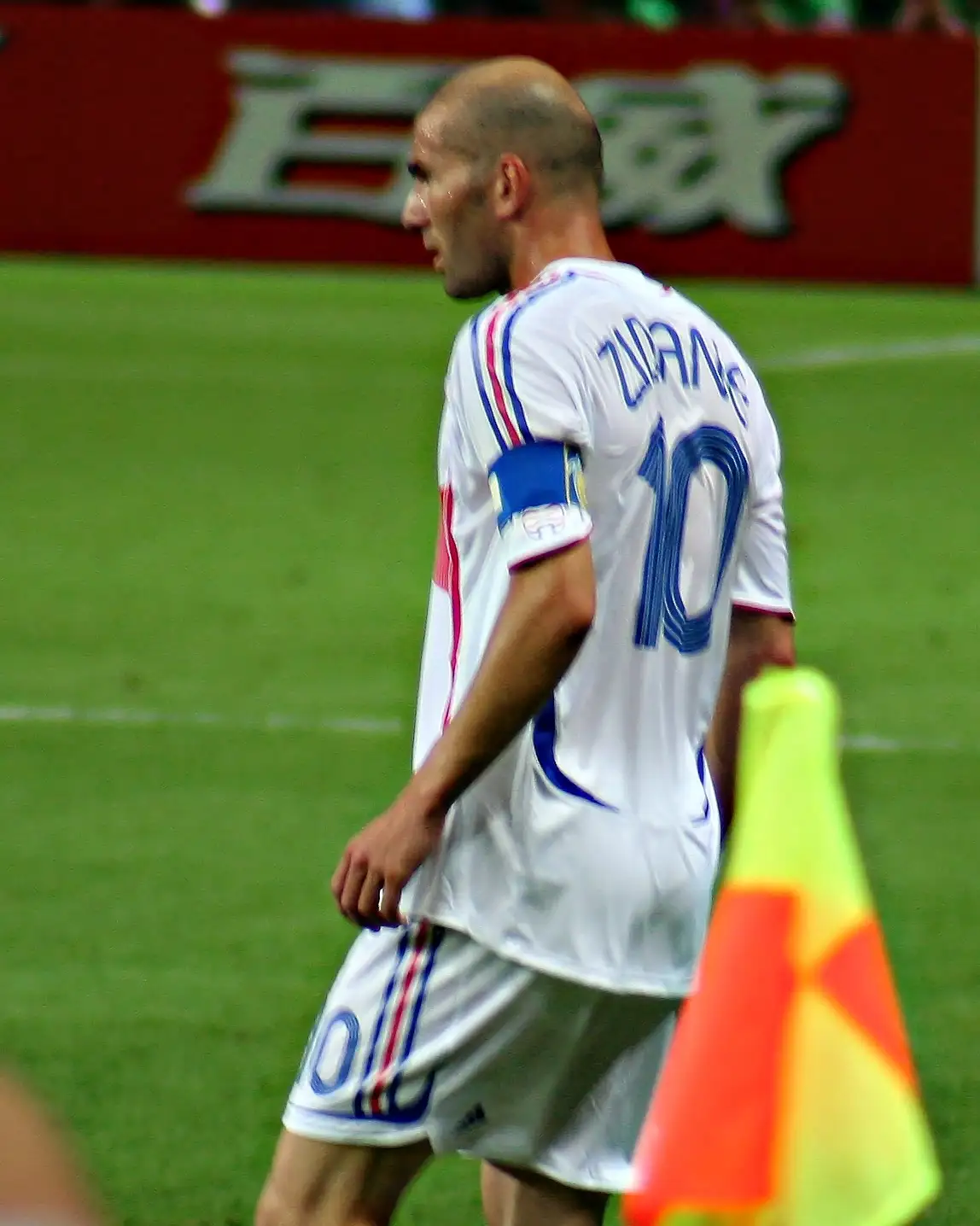
| 110 | Zidane was sent off, ordered out of the match, for headbutting Materazzi in the chest | His 108th and last game for France ended early |
| 120+ | Italy scored all five penalties; David Trezeguet hit the crossbar for France, and Fabio Grosso scored the winner | Italy won 5-3, with Materazzi scoring their second kick |
The red card carried a cost beyond the scoreline: it ended the international career of France’s captain, on 108 caps.

Did Italy win because of the headbutt?
The short answer

The career the headbutt ended
The common view counts Zidane among the greatest players the game has seen. It rests on two peaks, the 1998 World Cup and the 2002 Champions League final, and running through all of it was a temper: by his own count, in a 2016 magazine interview, he was sent off 14 times.
From La Castellane to Bordeaux
La Castellane, a housing project in the northern districts of Marseille, is where Zinedine Zidane grew up, the son of Kabyle immigrants from Algeria. His boyhood idol was Enzo Francescoli, the Uruguayan playmaker who spent the 1989-90 season at Marseille, and years later Zidane named his eldest son Enzo after him. He made his professional debut for Cannes in May 1989, as a substitute in a 1-1 draw at Nantes. His first goal, on February 10, 1991, won him the red Renault Clio the club president had promised for it. He joined Bordeaux in 1992 and helped them reach the 1996 UEFA Cup final, lost 5-1 on aggregate to Bayern Munich. Juventus followed in 1996: two league titles, two lost European finals, and 1998 ahead.
The 1998 double
Zidane and the 1998 World Cup hold a permanent place in World Cup history. Then came the final on July 12, 1998, against Brazil at the Stade de France: two headers, both from corners, and a 3-0 win that gave France its first World Cup. Brazil’s striker Ronaldo Nazario was taken ill at the team hotel on the day of that final, left off the first team sheet and put back in the lineup before kickoff; four years later he scored both goals in the 2002 final, a run Fizbal traces in Ronaldo Nazario’s 2002 comeback. That year Zidane won the Ballon d’Or; see Ballon d’Or winners by year. Three years later, a world-record fee would take him to Real Madrid.

The peak: the record move and the 2002 volley
2001, Madrid: Real Madrid signed Zidane from Juventus that July for a world-record fee. The payoff came on May 15, 2002, at Hampden Park in Glasgow, where he met Roberto Carlos’s looping cross with a volley, a shot struck before the ball touches the ground, on his supposedly weaker left foot. It was the winner against Bayer Leverkusen and delivered Real Madrid’s ninth European Cup. Weeks later, Ronaldo Nazario’s 2002 comeback was complete with both goals in the World Cup final. In 2004 Zidane stepped away from the national team; a year later, they needed him back.
The comeback at 33
Zidane announced his retirement from the France team on August 12, 2004, after the Euro 2004 quarterfinal loss to Greece. A year later, with France fourth in their qualifying group, he announced his return on August 3, 2005. At the 2006 World Cup he missed the third group match through suspension, then drove the run: a 3-1 win over Spain in the round of 16, where he scored in stoppage time; a 1-0 win over Brazil in the quarterfinal; a 1-0 win over Portugal in the semifinal, his penalty the only goal. One match remained: Italy, in Berlin, on July 9, 2006.
What happened to Zidane after the headbutt?
After the headbutt, Zidane retired as planned, was still voted the tournament’s best player, and kept the country’s support. The Golden Ball, the award for the World Cup’s best player, was announced on July 10, 2006; a Le Parisien poll found that 61% of the French people asked forgave him. Four stops carry the story from Berlin.
- On July 20, 2006, FIFA banned Zidane for three matches and fined him 7,500 Swiss francs; retired, he served three days of community service with children, while Materazzi was banned for two.
- Adel Abdessemed’s bronze statue of the moment stood outside the Centre Pompidou in Paris from September 2012, then on the Doha Corniche from October 2013.
- As Real Madrid’s coach, he won the Champions League three seasons in a row: 2016, 2017 and 2018.
- The 20th anniversary of the final fell on July 9, 2026, weeks before the French Football Federation named him head coach of France on July 28, 2026.
The red card changed his ending, not his standing in the greatest of all time debate.
Did Zidane and Materazzi ever make peace?
The short answer
Was the headbutt seen by the referee?
The short answer
Today a video review would settle the incident on screen; this final was played before VAR existed.